


How to Reduce CNC Machining Costs Without Sacrificing Quality

CNC machining is widely used to manufacture precision components for industrial equipment, electronics, automation systems, and many other applications. However, the cost of a CNC machined part can vary significantly depending on its design, material, tolerances, surface finish, and production quantity.
For engineers and purchasing teams, the goal is not simply to find the lowest quotation. A low initial price may come with longer lead times, inconsistent quality, or additional costs during production.
The better approach is to reduce unnecessary manufacturing complexity while maintaining the dimensions, performance, and reliability the part actually needs.
Here are practical ways to reduce CNC machining costs without sacrificing quality:
Choose the Right Material
Material selection affects raw material cost, cutting speed, tool wear, and machining time.
Aluminum alloys are often economical for lightweight components because they are relatively easy to machine. Stainless steel may be necessary for corrosion resistance or mechanical performance, but it can require more demanding cutting conditions. Engineering plastics may be suitable for electrical insulation, low weight, or specific chemical environments.
- Mechanical strength and stiffness.
- Operating temperature and environment.
- Corrosion and wear resistance.
- Machinability and tool life.
- Material availability and stock dimensions.
Avoid specifying an expensive alloy when a more economical material can meet the actual functional requirements. At the same time, do not replace a required material solely to reduce cost without evaluating performance and compliance.
Simplify Part Geometry
Complex geometry usually requires more programming, specialized tooling, additional setups, or longer machining cycles. Deep, narrow pockets, thin walls, difficult internal corners, and features that are hard to reach can increase manufacturing time and the risk of distortion or tool breakage.
- Use standard internal corner radii where possible.
- Avoid unnecessarily deep pockets.
- Keep wall thickness practical for the material and part geometry.
- Reduce features that do not contribute to function.
- Design parts so standard cutting tools can reach critical surfaces.
- Avoid adding complex contours where a simple machined feature will work.
A small change to the 3D model can sometimes reduce machining time considerably without affecting the part’s performance.
Apply Tolerances Based on Function
Tolerances are one of the most important cost drivers in precision machining. Tight tolerances may require slower cutting, additional finishing operations, temperature control, specialized fixtures, and more detailed inspection.
Instead, identify which dimensions are functionally critical. For example, a bearing seat, mating interface, or locating hole may need a tighter tolerance than an external surface that only provides clearance.
- Define critical dimensions clearly.
- Use general tolerances for non-critical features where appropriate.
- Specify geometric dimensioning and tolerancing (GD&T) when it communicates functional relationships.
- Avoid combining unnecessarily tight dimensional and geometric requirements.
- Confirm that tolerances are achievable for the selected material and process.
Specify Surface Finishes Only When Needed
Surface finishing can add cost and lead time after machining. Depending on the requirement, parts may need anodizing, powder coating, painting, polishing, plating, or another treatment.
Before specifying a finish, consider the part’s function and environment. A visible consumer-facing component may need a consistent cosmetic appearance, while an internal mounting feature may not need the same treatment. Masking critical surfaces can be necessary, but it should be planned rather than discovered after production.
Reduce Unnecessary Setups
Each time a workpiece is removed, repositioned, and secured, additional setup and alignment time may be required. Multiple setups can also introduce variation between features.
Where practical, design parts so important features can be machined in fewer setups. Appropriate 4-axis or 5-axis machining may help for certain multi-sided components, while conventional 3-axis machining may be more economical for simpler geometry.
Consider Production Quantity
For prototypes and very small quantities, simple workholding and minimal preparation may keep initial costs under control. For repeat orders or larger production volumes, dedicated fixtures and process optimization may reduce the cost per part.
When requesting a quotation, provide the expected quantity and any forecast for future orders. Suppliers can then evaluate whether a more efficient production method is worthwhile.
Make Drawings and RFQs Complete
Evaluate Total Cost, Not Just Unit Price
When comparing CNC machining suppliers, consider more than the quoted price per part. Review engineering support, inspection methods, lead time, material traceability, and repeatability.
A slightly higher unit price may be the better commercial choice if it reduces rework, delays, and incoming inspection problems. Ask suppliers to explain the major cost drivers in the quotation.
Use Design for Manufacturability (DFM)
A DFM review identifies opportunities to make a component easier and more economical to produce before production begins.
At HY Metals, our engineering team can review drawings and 3D models, assess machining access and tolerance requirements, and suggest practical improvements. Our CNC milling, turning, and multi-axis machining capabilities support custom components from prototypes to production.
Early communication between the customer and manufacturer helps prevent avoidable cost and schedule problems.
Conclusion
Reducing CNC machining costs does not mean compromising precision or choosing the cheapest supplier. It means making informed decisions about material, geometry, tolerances, finishing, setups, and production planning.
The most effective savings often begin at the design stage. By specifying what the part truly needs and sharing complete engineering information, buyers can improve manufacturability while maintaining the required quality.
Need a quotation for custom CNC machined parts?
Send your drawings and 3D models to HY Metals for engineering review and a manufacturing proposal.
-

HY Metals Delivers High Precision CNC Turned Pa...
-

10-Day Turnaround on AL6063 CNC Machined Heat S...
-
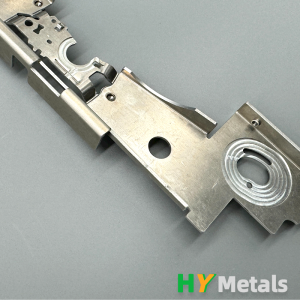
A Custom Sheet Metal Bracket Having Precision C...
-

China CNC Machining Supplier: What Internationa...
-
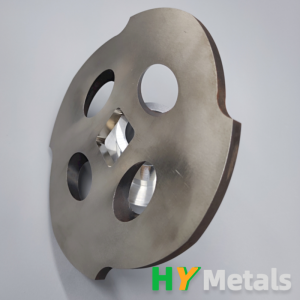
CNC Machining of 17-7 PH Stainless Steel: Best ...
-
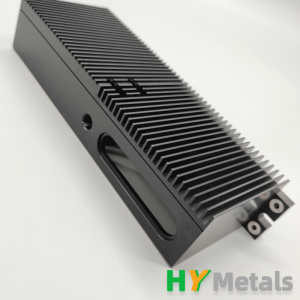
Custom CNC Machining Heatsink Prototype Aluminu...
-

Custom High Precision CNC Turned Parts Turning ...
-

Custom precision CNC machined Titanium parts wi...
-
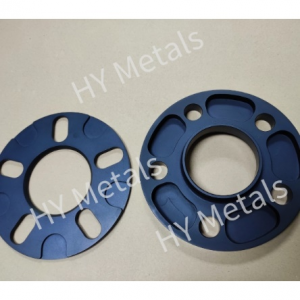
Customized CNC machined aluminum parts with san...
-
High precision CNC machining services PEEK mach...