


When manufacturing custom metal parts, clear and durable product marking is often just as important as the part itself—whether it’s a brand logo, part number, batch traceability code, or warning label. At HY Metals, we regularly apply marking solutions across our sheet metal fabrication and CNC machining production lines. Here are the five most common marking methods, along with the materials they suit and their key advantages and limitations.
Laser Engraving (Laser Marking)
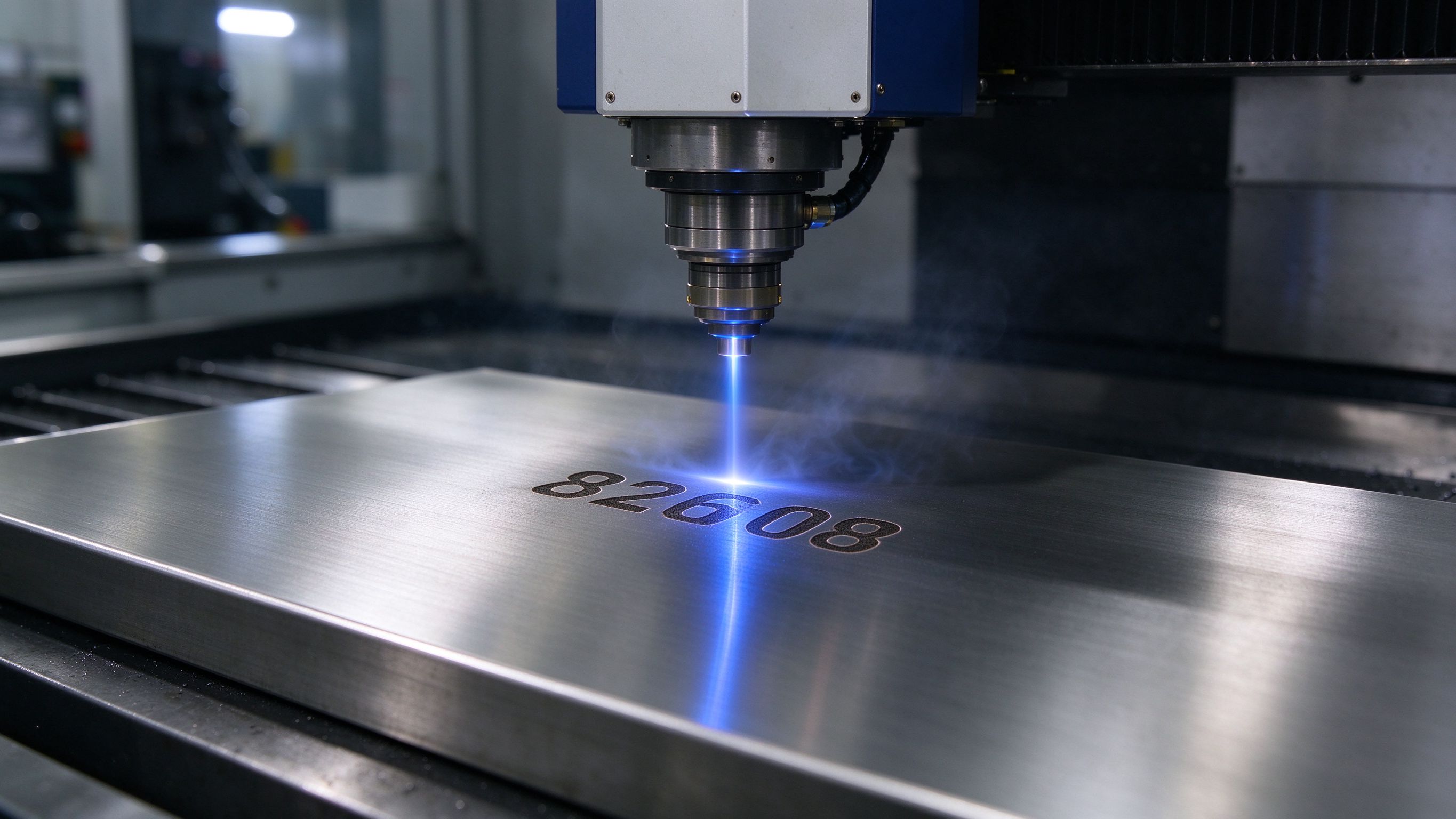
The most widely used marking method across metal industries, laser engraving or laser marking uses a focused laser beam to remove material or alter surface color.
Suitable materials: Stainless steel, aluminum (anodized or raw), steel, titanium, copper, and most engineering plastics.
Surface treatment: Works on raw, powder-coated, anodized, and brushed surfaces.
Pros: Extremely precise, permanent, no tooling cost, fast setup, clean edges, no deformation.
Cons: Mark is shallow on soft materials, contrast varies on bare stainless, limited color options.
CNC Mechanical Engraving
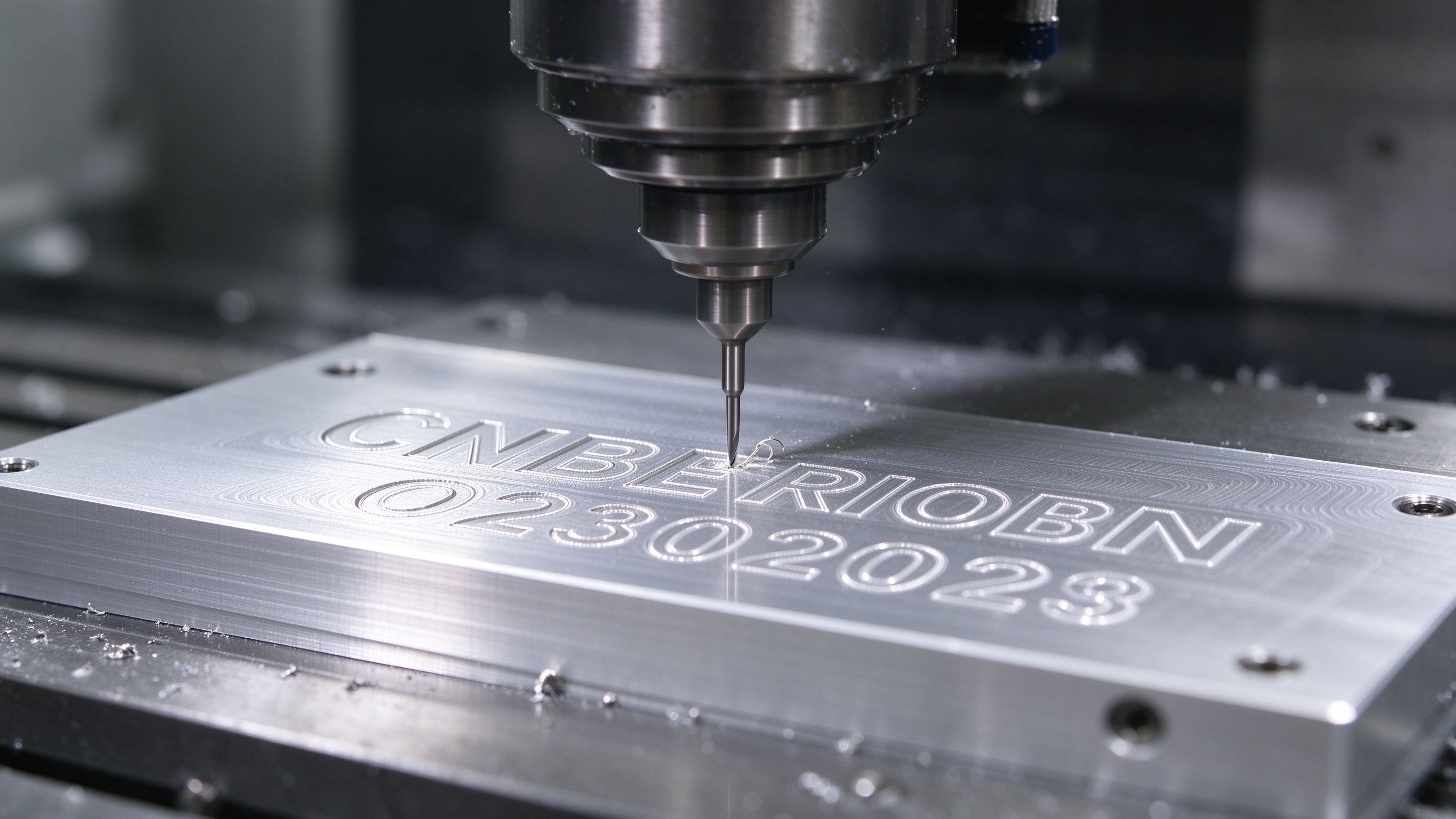
CNC engraving uses a rotating cutting tool (end mill) to physically carve text or logos into the part surface.
Suitable materials: Aluminum, steel, stainless steel, brass, copper, and hard plastics.
Surface treatment: Typically applied before surface coating, or on raw machined surfaces.
Pros: Deeper mark than laser, ideal for high visibility, can engrave fillable recesses.
Cons: Slower, requires tool path programming, not suitable for ultra-fine text.
Stamping / Coining (Press Marking)
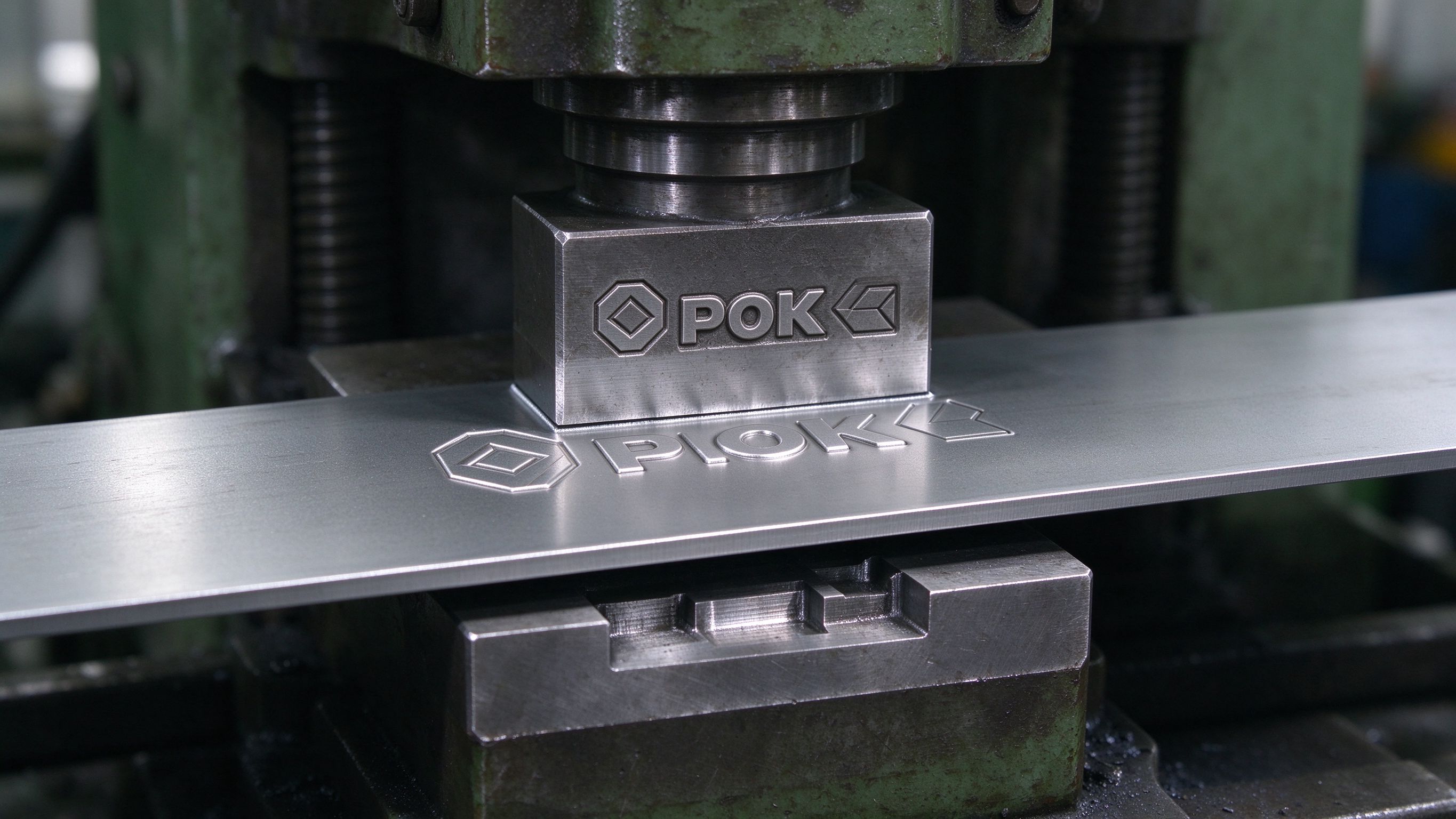
Stamping uses a hardened die pressed under high force to create a recessed or raised impression in the material.
Suitable materials: Thin sheet metal, brass, copper. Works best on soft, ductile materials.
Surface treatment: Applied before coating; creates a permanent mechanical indentation.
Pros: Very fast for high-volume, extremely durable, tactile premium look, no consumables.
Cons: Requires custom die tooling, can deform thin parts, fixed text per die.
Screen Printing (Silk Screening)
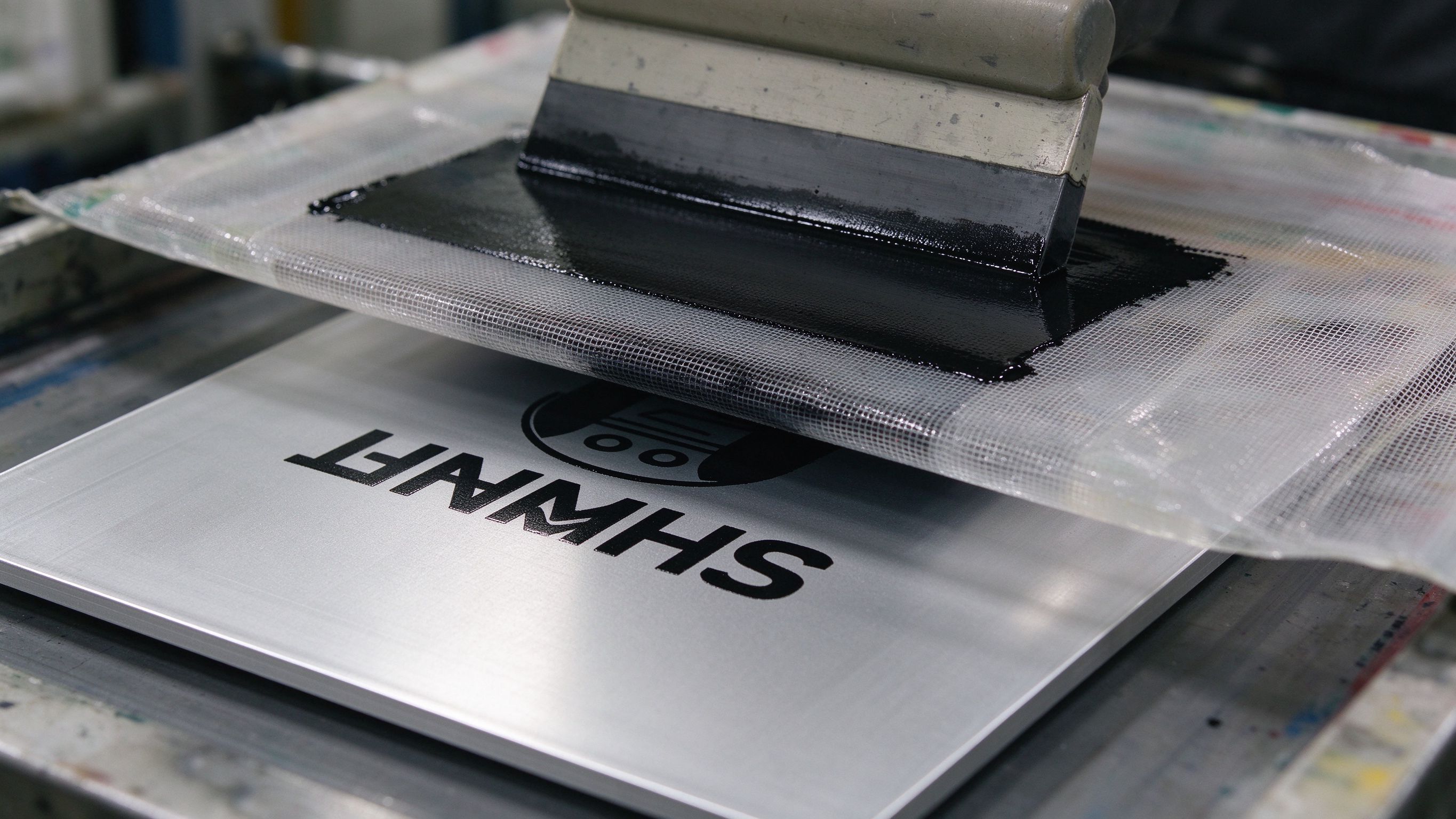
Screen printing pushes ink through a mesh stencil onto the part surface.
Suitable materials: All metals, plastics, and flat or slightly curved surfaces.
Surface treatment: Applied on powder-coated, painted, anodized, or raw surfaces.
Pros: Full color capability, low cost for large batches, visible on any color, large graphics.
Cons: Not permanent—can scratch off, requires flat surface, not ideal for textures.
Paint Filling
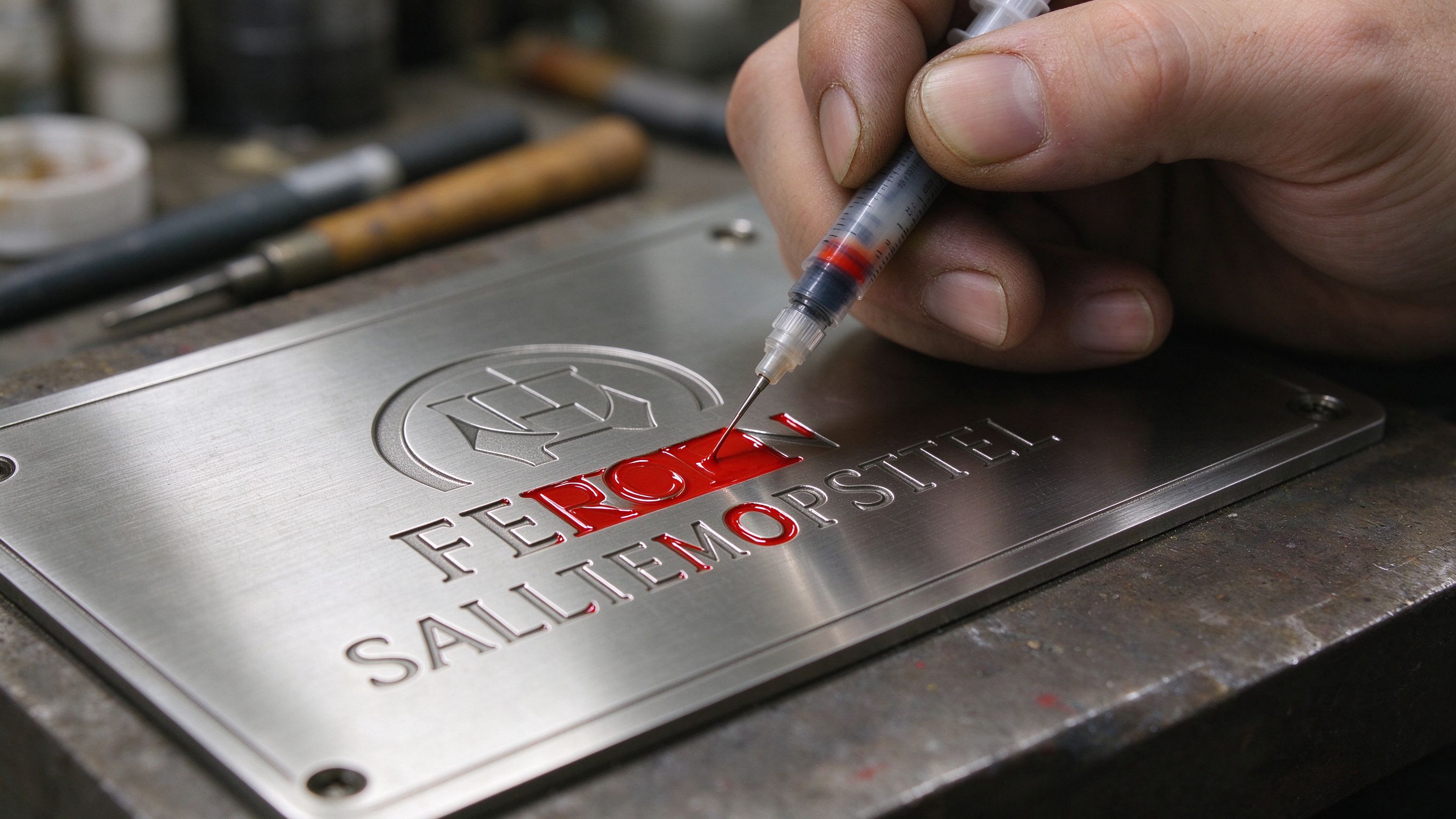
Paint filling combines an engraved or stamped recess with hand-applied enamel or epoxy paint for high-contrast marking.
Suitable materials: All metals, commonly used on stainless steel, aluminum, and brass nameplates.
Surface treatment: Typically paired with laser or CNC engraving to create the recess.
Pros: Maximum contrast and visibility, premium aesthetic feel, highly durable once cured.
Cons: More labor-intensive and higher cost, manual application inconsistencies.
Choosing the Right Method
There’s no single “best” option—it depends on your material, surface finish, production volume, and visibility requirements. At HY Metals, we recommend the most suitable marking method based on your specific application, and can handle the entire process in-house alongside your precision machining or sheet metal fabrication order.
Need advice on marking your custom metal parts?
Contact HY Metals today for a free consultation and quote.
Post time: Oct-05-2026